
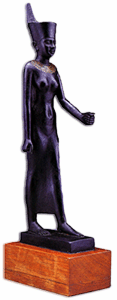
Bronze
statuette of the goddess Neith (E14309), whose main
cult center was at Sais.
|
|
Gallery
Tour
|
|
TEMPLES
The
House of God
|
The temple
was a vital part of ancient Egyptian society forming the core of the religious
and administrative life. Most ancient Egyptian towns of any size had a
temple dedicated to the local god or goddess
as well as smaller chapels for other important deities. In large cities
such as Thebes and Memphis, vast temples complexes
developed over time with many buildings supporting the cults of a number
of different deities. The ancient Egyptians believed that a deity resided
in the cult image housed within the temple's sanctuary. Pilgrims visiting
the temple would not be able to approach the deity directly; only the
king and priests acting as his representative could perform rituals involving
the cult statue. In local temples, the highest ranking town administrators
often served as priests in the cult of the town's patron deity. People
wishing to show devotion to a particular god
or goddess or who had a desire to be near them could dedicate statuary
and stelae that would be housed within the temple.
The University of
Pennsylvania Museum's (UPM) Egyptian collection includes elements of
temples and temple decoration (architecture, relief, and statuary) from
many significant sites and time periods including: Buhen (New Kingdom),
Sais (Late Period), Abydos (Early Dynastic
Period, Middle and New Kingdom), Memphis
(Old Kingdom and New Kingdom), among others. Also included are artifacts
relating to the role of temples in society and temple cult (such as
private stelae, votive statues, and offerings).
|

